
Introduction
Several cultural and religious ceremonies are celebrated among the Wakhis surrounding the Pamir area in four countries Pakistan, China, Afghanistan, Tajikistan and Russia as well in the current times. In ancient times, the area was called Wuk̃han land of Wuk̃his. Tag̃hmi is one of the ancient events celebrated among the Wuk̃his (wakhis) on Bomidẽnyo Wuk̃han (Wakhas). It is said that Persian tukhm is derived from tag̃hm means seed. For the Persian speakers pronouncing ‘g̃h’ was not possible so they pronounce it ‘kh’ and then the rest of the word said tukhẽn for seed, which is even used in Urdu. Here tag̃hm gives two meaning first seed and another celebration of the seeding festival so this writeup is basically about the festival. It is an event that has its ancestral roots in Zirtashti (Zoroastrians).
This event is celebrated to say thanks to God because he gave the opportunity to Diqun (people related to agriculture) to recultivate their field and also pray for a better return. The event is considered welcoming and a blessing for newborn children who celebrate this agriculture event first time with their parents. This event is celebrated for three days consecutively following the event given below.
Before the celebration of the event Khalifa and the master of diqun hisob give soaat (time). The responsibility of fixing soat (time) is of khalifa but he asks the master of diqun his job to make it more reliable for the people. It is mostly on April fist but sometimes khalifa can change and can be celebrated a day before or after. In Shimshal it is celebrated after 10 days of Nawroz. According to Shimshal Diqun Hisob it is organised while the sun rises from Chutpert and as per the new Wakhi calender, it is celebrated on Yitoqish 11 or 12 depending on the number of days in February.
Tag̃hmẽ Mis Ror (The Day Before Tag̃hm)
S̃heg̃hd yup wezũmn:
In most Wakhi areas water freezes in winter and for six months people use river water directly from rivers for their daily household use because the channels are frozen. When the Spring arrives in the villages villagers use spring water. When winter transitions to spring it is easier for people to clean channels and let water flow through them. So they say s̃heg̃hd yupk (new water: the water that comes in the stream right after the frozen river starts to melt) a day before tag̃hẽm early in the morning Shogũn Pẽtũk (master of the ceremony) goes to the zẽwor (a main inlet of the channel) and waits for the children. Children aged 5 -12 go to the shogũn pẽtũk for s̃heg̃hd yopk (new water) with pots. The shogũn pẽtũk offers a bucket of water to each child.
During this course of activity children splash water on each other. Before sunrise, all children come back with new water at the door of their house. The most aged lady from the neighbourhood goes to each house and before taking the new water the home she drops a few drops of new water through the recẽn (roof window) into the house and a sample of boroni rahmat. Then she takes the new water to the house. While she enters the house with the new water and child, they both say shogũn bẽhor mẽborak.
People in the house stand up and respond to them with the same respect as bakhti duwlat. She throws a handful of flour on each pilar in the house and on the beam separating the main house from the c̃hẽkis̃h called yiriẽwas, this course of activity is called pẽtũk din. Subsequently, she goes to all the houses in the neighbouring. Children with new water wait for her at their doorsteps. If any household does not have a child to bring water, the children in neighbouring are responsible to bring s̃hag̃hd yupk/ new water to the family.
Semẽn Pẽrkitẽn (Procesing Semẽn)
The first day is called semẽn prẽrkitnẽ ror (the day of making semẽn. Semẽn is a sweet dish which people cook for this event and pẽrkitẽn is the process of making the food. Semẽn pẽrkitn is the next activity which ladies have to do. They take some samẽn flour along with some wheat flour and start cooking in the new water. This activity takes a full day time. A week before man are responsible to bring dried firewood from the mountains for cooking semẽn. A day before they cut the wood into pieces to make firework easy. If someone’s personal channels are not cleaned or distorted, the man goes to repair them and clean them so the water could easily flow through them. Boys and girls play their last tẽsũri while girls play put din for the day to celebrate the event.
Pulk Yundak
A day before the Tag̃hm ladies of the family, tribe and relatives take pulk to the newborn babies. The pulk is utilized by parents to prepare beautiful and attractive clothes and caps for their children. Pulk is prepared with 10 to 15 beads to decorate the children’s clothes, especially caps. People who have the first child would get plenty of pulks. Children having more siblings are also not forgotten. Parents with newborn babies wait for their relatives, neighbours, tribeswomen and friends with the hope that they will bring pulk for the child.
Tag̃hm durzẽn (taking seed out)
In the season of autumn, people separate some grain for thaq̃h (seed), which is kept in a special box made of select stone called g̃huv and covered with stone to keep safe from muses. Before reaching of children with pishpish wẽnũk the elder of the house opens the box’s lead and takes out a chẽkpist (small leather bag) full of wheat, barley and pease because pishpish wẽnũk is to be kept with that seed bags using for the next day. The shogũn pẽtũk is taking a dhoc ful (big leather bag) full of grain for the main tag̃hmẽ wunder. In all the other houses in the house of shogũn petũt the elder man or woman initiates this activity.
Sẽtorsẽt Pishpish wẽnuk wẽzũmn (Tacking Home Sẽtors and Pishpishwẽnũk)
Early in the morning before sunrise a young man from the house of getũw/ subtribe of the shogũn pẽtuk goes to the mountain to bring a piece of wood that makes it like an arrow, wẽnũkẽ shep (……..and yarzẽ s̃hulkh (branch of juniper). After sunset, he appears in the shogũnẽ wundẽr and children mostly 5 to 12 go to the place to receive a piece of yarzẽ s̃holkh and a few wẽnũkẽ shapk with a sẽtors. As the child reaches the door the old man or woman ever leading in age takes the pishpish wẽnũk to the home.
The child with pishpish wenũk also joins him. Both of them enter the house saying shogun bẽhor meborak (congratulations on the spring celebration). Until then all the family members should be back from their work. They all stand up and response Bakhti duwlat to them. The elder person takes the pishpish wenũk to the place where the family has placed chikpist ful of grain and place with respect along with gran in the specified place
Sẽtorẽ Mũl
Sẽtors[i] is an arrow-type wooden piece which is fixed to the tishpor (plough) while ploughing fields. All men from sub tribe (gẽtũw) who are able to participate in the upcoming agricultural activity come to their elder’s houses. While male members come from their jobs they gather in the house of the bezug (the most aged in the extended family ) with a pot of mũl from their houses. This event provides an opportunity to bring all the family members to one platform and discuss next agricultural activities. They select a young man who goes to the mountain to bring sẽtors for ploughing. This small event also provides the opportunity to resolve conflicts and be able to provide comfort to those who are unhappy or distressed due to some reason. After eating mũl, they were discussing availability of oxes, instruments used for ploughing and feed for the oxes etc. Before they leave for their home The remaining mũl was together and divided among them who had an ox for ploughing, which they use to feed oxes involved in ploughing in forthcoming agricultural activities.
Tag̃hmẽ Ror (The Day of Tag̃hm)
Each one gets up early in the morning and starts preparation for the event of tag̃hm. Newborn babies become ready by their parents, especially with new clothes and a cap decorated with the pulk. (a bunch of beads offered from relatives and friends on the day before.
Jemaat Khonẽ dua
After preparation with a pot of samẽn elders go to Jamat-khana to offer thanks to God for good crops in the coming season. If someone gets late due to some reason, others wait for him/her and then they all participate altogether in a blissfully collective way. As they all reach they offer prayer and eat the food, marching to shogũnpẽtũk’s house directly where they have to participate in t̃ũman din.
T̃ũman
From Jamaat-Khana the elders above age 50 go to shogũn petũk’s (master of ceremony) house for tũman din. Where on behalf of the family food is offered to the elders and then Tũman is started. The group of elders make smoke from juniper tree’s branch. Before making smoke of juniper tree they close the windows facing the sky and the door of the house. Because of this the house is full of smoke.
Subsequent to this, they first open the windows facing the sky (windows on the ceiling) and then the door of the house to release the smoke. In the olden time, smoke of sẽpandẽr and the branch of juniper were considered germicide and used for relief from diseases. So this event was celebrated to clean the villages from the germs after the tensive winters. After t̃ũman the shogun pẽtũk takes a dhicẽk (leather bag) full of seeds along with pishpish wẽnũk and leading the elders to tag̃hmẽ wudẽr.
Tag̃hm-ẽ wũndẽr
Before the arrival of elders from the house of Shogũn Pẽtũk all youth, children and women assemble in the Shogũnẽ Wunder (field of ceremony). Children gather all oxes who have to be engaged in ploughing in the shogũnẽ wundẽr and ploughing through the ploughing days, elders come from the shogũn Pẽtũks house with tag̃hẽm and pishpishwenũk while women with samnẽ tẽbaq (pot of sẽmen) and young and newborn babies. As everyone arrives the shogũn pẽtũk offers a piece of juniper branch to each which is then utilized to decorate their caps. Following that the Khalifa recites prayers and spreads some grain as seed to the field. Any youth fosted two of the oxes to the plough and khalifa initiates ploughing in the shogũnpẽtũke wundẽr.
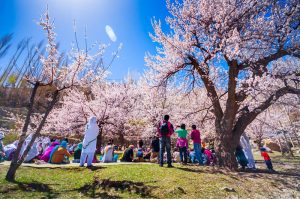
Every male touches the plough as initiating the agricultural work. Parents take their children to the plough to make their hands touch it. As this activity is done everyone sits according to their age and the youth among males and females offer semẽn the special dish to the community members. On both sides men and women youth offer the best semẽn to the elders as the custom of the village. It is a symbol representing respect for elders. This assembly is also led by the most aged person on both sides male and female who are the most honourable for the community members. In each and every assembly they are considered as the chief guest of the community. At the end of the event khalifa again recites dua and everyone says shogũnmebork to each other and leaves for their home for the next activity.
Sohibi Khona Tag̃hmẽ Tẽr Wundẽr Yundak (taking seed to each households field)
As everyone goes home they prepare to initiating ploughing in their own field. Each household prepares a child aged 3-8 shogũn Pẽtũk who carries tag̃hẽm and Pishpish wenũk prepared in the previous evening to the field with all family members. The khalifa again recites the prayer for better and most yielding, beneficial crops and they do the same what they did in the shogũn pẽtũkẽ wundẽr. There are only three khalifas in the village so they train their assistants called shogirdisht. To cover all the families living in the village shogird go to the different neighbourhoods and recite the prayer to each household living nearby. The children who have taken tag̃hem to the wundẽr are responsible to bring back the remaining seeds home. As they reach the door of the home women close the door for them and ask questions like What did you bring? The child says, redhan yũrkem wũzmetk ( I have brought burly). They ask the same question and the children reply dũr g̃hedimẽm wuzmetk ( I have bought wheat-like gems) the women again ask the same question the children reply joyban s̃hafs̃h sẽtek̃hem wũzmetk ( I have brought a daughter in law with hair of fairies). The women ask the same question again and the children respond cũtrẽ padh petrẽm wũzmetk ( I have brought a boy with spindle feet)[ii] As the women finish their question and the children their responses they open the door for the child and he takes the grain to the same place from where he had taken. Thus the activity is over and children go for their play while other family members for their work. Women take sẽmen to their relatives’ house, especially newly married women take Semẽn to their parent’s families on the same day.
Taghmẽ Yan Ror (The Next Day of Tag̃hm)
Tẽbaq Undak
On the third day, the newly married women take semẽn tebaq to their parents and relatives which is mostly not covered on the day of tag̃hm. So all the women are busy with visiting relatives’ houses and sharing semnẽ tẽbaq. Women mostly celebrate this part of the event till the evening while men go for agricultural work especially cleaning the channels if any channel is still not cleaned because people have to use channels which are passed nearby their fields. In the evening the members of the household come together and discuss if the women have reached all the relative’s houses. If they could not then women will go to the houses of the ones left out on the fourth day. Thus the event reaches the end.
Right from the second day, man start watering and ploughing their fields. Shimshal was divided into three big rum (tribes) so each tribesman comes together to water the field of nominees from the tribe. The turn of water would go to a tribe per day. As a result, after three days each tribe would get their turn. This happens because of a shortage of water in the streams in early April. Each tribe would irrigate the fields from low land to higher land. The nominees/representatives go to zẽwor early in the morning to confirm water flow to the channel and in the evening to block the water between stream and channel call yupk pẽrchũv kẽtak. Till Savsẽsar another event people remain busy with agricultural work especially ploughing fields.
Men with ploughing and women with cooking and taking care of the animals. On the ploughing day, any individual woman of the get̃uw (sub trib) comes together for cooking for the men engaged with ploughing. Male children participate in lẽmurzg khẽs̃hk (making the surface of the field level). On the day of rag k̃hak (making hips to make water flow easy), men of the gẽtũw get together in the evening for ragk̃hak while young boys level the sides of a rag called lash khank and in nahang it is called pẽt̃ik pẽt̃ak k̃hak. This activity continues till the end of ploughing or we say till the celebration of savsẽsar.
[i] When there was no iron instrument eg nowek and tish sẽtors was used to ploph fields). Even till 1960s this instrument was used.
[ii] During the prayer the khalifa pray for better crop, and good health humble decedents so the child narrates the same thin connecting with his arrival to the house from the field.
Tag̃hm By: Aman Ullah Aman Maad
Leave a Comment