Wukhis ( ̃ Wakhis) across the region celebrate various traditional events known as shogũn. These
celebrations are deeply connected to agricultural cycles, livestock rearing, and cultural life. Primarily,
they are expressions of gratitude to God, seeking peace, safety, prosperity, and harmony with nature.
Another important purpose of these events is to strengthen unity among different tribes, groups, and
villagers. In a harsh and demanding environment, such occasions also provide moments of happiness,
joy, and relief from daily struggles.
Almost all traditional ceremonies are linked with sports and games, promoting a culture of
sportsmanship, playfulness, skill development, and collective joy within society.
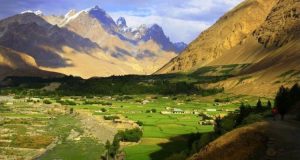
Vichẽhosh is one such celebration that is unique to Shimshal. It does not exist in other parts of Gojal or
Wakhi regions. It is the first shogũn (ritual) as per Diqun Hisob (Wakhi mountain calander) celebrated in
Shimshal and marks the end of nearly sixty days of complete shade, when the village receives no direct
sunlight.
During this period, the sun travels behind the southern mountains, leaving Shimshal without sunshine.
On 1st February, according to the Wakhi calendar (Panz̃toqish 18) and the Shimshal Diqun Hisob (Yir ẽr
Yupk), the village receives full sunlight once again. This day is therefore celebrated as a blessing and a
sign of relief from the harshest phase of winter.
The meaning of the event reflects its purpose. “Vich” means out, and “hosh” refers to a type of soup,
also called amoch/moch in Wakhi. The name Hoshigarm similarly means warm soup. Symbolically, the
event signifies taking soup outside the house without it freezing, which was impossible during the peak
winter. It also represents pushing coldness out of the village. From this day onward, people can sit
outside, particularly in the courtyard of the Jamaatkhana, and enjoy warm amoch without it freezing.
About a week before the event, the Khalifa, in consultation with the master of Diqun Hisob, announces
the exact soaat (time) to the villagers. At sunrise on the appointed day, villagers gather at the
Jamaatkhana, each household bringing a pot of amoch/moch. Volunteers receive the food and place it in
the communal cooking area, waiting especially for elders to arrive.
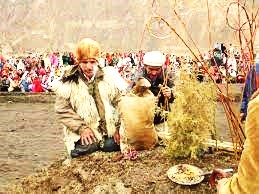
Once everyone has gathered, the Khalifa recites prayers (dua) for safety, a prosperous year, harmony
within the community, and peace for the country and the world. After the prayer, people greet one
another by saying “Shogũn Mubarak.”
The community then sits according to age, led by the eldest person. Groups of five or six people are
formed based on age. Youth serve the amoch/much, beginning with the elders, as a sign of respect. The elders are served first because of their status and because they, in their youth, honored their own
elders.
After enjoying the first warm soup outside the house, the Khalifa offers another prayer. Children then
leave to play Jẽgũn Den, a traditional game that begins on this day. Elders and youth remain in the
assembly to discuss village affairs.
One of the most important decisions made during this gathering is the selection of two or three brave
men to visit the Pamir pastures as khabargir (messengers). These men travel across the Shimshal Pass to
deliver messages to the shẽpũn (winter volunteer shepherds) who care for the villagers’ yaks and to
bring back news of their well-being.
Elders also advise youth under the age of 20 to organize the evening event known as Khẽyardhayẽ
Khẽdoyi (the Sacrifice of the Old Man).
By afternoon, everyone gathers at a common ground to play Jẽgũn, a traditional polo-style game played
without horses or animals. While children begin playing immediately after leaving the Jamaatkhana,
elders and youth start in the afternoon.
A day earlier, players prepare their jẽgũn sticks, while a skilled young man prepares the put (ball) from
yak-hair thread. Before the game begins, two or three respected villagers visit families who have
experienced recent deaths (mẽlolisht) and invite them to join. This act symbolizes encouragement,
reminding them that life includes both sorrow and joy.
Elders above the age of sixty are divided into two teams, including members from grieving families. The
first match is played between these elder teams, with villagers cheering enthusiastically from the
sidelines. After about half an hour, the elders’ game ends, and the youth begin their match, which
continues until sunset.
At the end, a village representative thanks everyone for participating, and people return home.
After the polo games, youth under twenty from neighboring pastbar and wuchbar gather and select a
young man known for humor and leadership to play the role of Khẽyardhay (Old Man). “Khẽyar” means
old, and “dhay” means man. This evening ceremony involves children above five and youth below
twenty.
Under the leadership of the Khẽyardhay, groups go door to door collecting food items such as flour,
meat, beef, and sẽmn. A house is pre-selected for hosting the event. While youth cook, younger children
play Parz̃hũpal, a night game involving decorated animal bones, stone tossing, hiding, searching, and
teamwork.
Once food is ready, two youth invite another group for the niyaz. Guests are asked to enter through the
rẽcen (roof ventilator), symbolizing bravery and physical strength. Strong youth stand below to safely
receive children. Inside, formal greetings are exchanged: hosts say “Khushamadid,” and guests reply
“Khushbosh.” After the meal and prayers, roles reverse, and the guests become hosts for another group.
Another game involving hiding, searching, and symbolic capture is also played. Captured players are
honored with food and hospitality. These activities likely served as silent training for youth to prepare
them for dangers such as past nomadic raids on Shimshal Pamir.With the final invitation, the ceremony concludes. Children under twelve return home, while older
youth clean, reorganize the house, cook additional dishes such as sẽmn, nẽrin, or yipkhech, and return
all utensils by morning. For the night, the house symbolically belongs to the youth.
Thus, the celebration of Vichẽhosh / Hoshigarm comes to an end, marking warmth, resilience, unity,
and the enduring spirit of the Shimshal community. This year it was celebrated a few days earlier.