The Oral History of Shimshal says that when Gikis/ Gigis was killed by his brother Maghlut of Nagar, Mamusing traveled to Badakhshan with his elder brother Chusing to find out a king for Huza. As discussed Chusing and Mamusing succeeded in finding a prince for Hunza in Badakhshan darwaz and left Darwaz for Hunza. In their return from Darwaz to Hunza, Mamusing falls in love with a woman from the family of Qazian[ii] called Khadija in Wẽkhan and requested his brother to arrange their marriage. His bother refused and brought him back forcefully to Hunza.
They came back to Hunza with the new Mir Shah Khan letter called Aysho( the king from the sky). His brother’s refusal created conflict between them. So Mamusing left Baltit and went to Machusing settled in Chaprot a village in the lower part of Hunza. He discussed his desire to Machusing but he also refused to fulfill his wish. Mamusing was not able to forget the lady in Wẽkhon and escaped back to Wẽkhon of Badakhshan. There he managed to arrange his marriage with Khadija/ kick-name Jayik also called ‘ja’ and settled for some years. Mamusing did not disclose his relationship with his brothers to the family of Khadija so Khadija’s family expected Mamusing to return back to Hunza and start his newlywed life with his own family.
On their return to Hunza/ Kūnjūdh Mamusing and Khadija were gifted with yaks for his baggage and also a lot of sheep and goats, which was the custom of the area. Such kinds of presents are custom of Wakhi people, still exist. He left Wẽkhon for Hunza but he was aware of his position in Hunza and his relationship with his brother, which he has deteriorated by disobeying both his brothers. When he arrived in Lover Avgarch instead of going to central Hunza, he preferred to stay and cultivate Gircha a land with a spring for cultivation but it was more exposed to the Karghiz who were looting each other and other units in the Pamir area. Keeping in view the security of his family and property he selected Avgarch[iii] a valley on the left bank of Upper Hunza River on the foot of Qorun Pir.
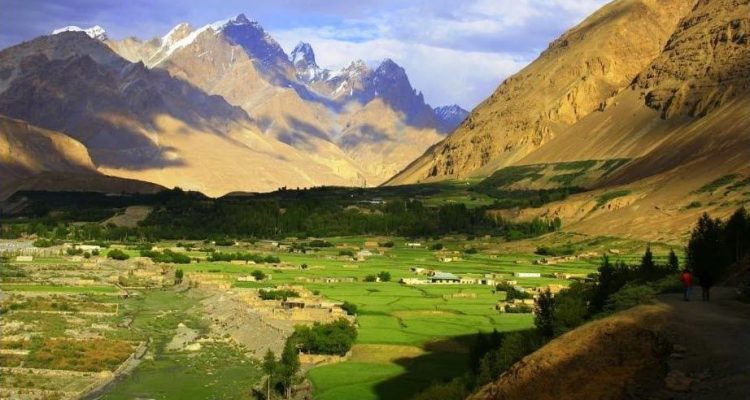
Avgarch was a lowland pasture and cultivatable land on the slopes of Qorun Pir/ Qarun Pass where they settled for some years before migrating into the lower reaches of the Shimshal Valley. They used the cultivatable land for agriculture and as winter settlement while using Pẽryar and Boyber as summer Pasture. The spring in Pẽryar is still called Jaẽ Kūk/ spring of Ja[iv].
They were leaving a happy life, caring for their livestock and land. He was Mardi Sayad / hunter so the land was more suitable to him as rich for hunting as well. Deers were nearby their house while ibexes with snow cock at a bit distant. They were using hunted animals for daily food and using domestic animals for dairy product development.
Their livestock and agriculture were increasing day by day and added to their life comforts. God blessed them with a child, which even enhanced their hope and happiness for the future. They named the child Lola Pẽrpak[v] (Madik & Madik, 1995)
One day some Karghiz looters attacked them from the Sarikul side. Mamusing hid his son Lola Pẽrpak/ Madik in a slat grain box and escaped to nearby mountains. Their congregated sheep, goats, and other animals also remained in the low land of Avgarch village while running away to the mountains. The attackers took away all the animals and also the child except a black goat[vi] with the baby and some grain.
The loss of their son Pẽrpak became a source of conflict between Mamusing and Khadija and she started calling him Shūmsing[vii]. The loss of their son was great grief for Khadija and as well for Mamusing but Khadija nominated Mamusing as responsible for that great loss because he suggested keeping the child in the grain box. Mamusing realized that Avgarch is not a safe place for them, they should look for another place.
As it is narrated, He was Mardi Sayad (hunter) so he reached to the top of Qorun/ Qarun and viewed Dut and Lupḡhar[viii]. At the time fighting for survival, he thought of the land visible from Qarun Pass. He left Avgarch and made his way through Qarun Pir for the land visible from Qarun.
He showed the lush green pasture of Lupg̃har to his wife and motivated her for leaving Avgarch for the next destination. The beautiful land attracted his wife for two reasons, first safer and secondly lush green and good for stock farming. They reached Lupḡhar and settled there but did not find the land feasible for agriculture because Lupḡhar being a high-altitude land, was not suitable for crop cultivation. Mamusing thought to visit ahead.
He went further to the east and found Putdih (round village), which has been washed away by the Shimshal River (Muhammad Nayab) near Ziarat. Some people say that it was Sẽtẽnek derived from Ostonek[ix] which is even visible from Qorun. Its previous name was Putdih when Pir Shams passed through and meditated on the opposite side of Putdih they named Put̄dih Ostonek later on became Sẽtẽnek.
Shimshal River has destroyed most part of the Sẽtẽnek some part is still visible from Shimshal Road. They irrigated Putdih and settled there for a few years. Mamusing used Lupḡhar as summer pasture and haunting spot while Putdhi was for agricultural land and winter settlement
After irrigating Pudhih/ Sẽtẽnek Mamusing’s next destiny was Mẽlongudi derived from Mẽlungẽ-dih (Village in the middle) One day he went more to the east and found another cultivatable land Melongẽdih (Malungedih/land in the left bank of Mẽlongūdi glacier, they cultivated the new land as well? Mẽlongūdi was more facilitated in terms of firewood, and more land for agriculture and grazing.
They did not leave Sẽtẽnek for Mẽmongūdi but used both settlements. Melongūdi was not just a land for summer agriculture but also facilitated summer pasture so they do not need to go to the far-flung areas for summer livestock farming. They were taking care of their fields as well livestock in nearby areas. The land between Mẽlongūdi and Sẽtẽnek was also a comfortable grazing area in autumn and spring. Now they have all seasonal grazing areas along with two agricultural land for producing animals’ winter feed and their own food.
Exploration of Shimshal
As hunting was the source of his income so Mamusing went ahead and crossed the Mẽlongũdi/ Malamgudi glacier and reached the top of Rezginẽ Sam from there he viewed a series of fate land. To explore the land he marched deeper to the east, thus Shimshal village was explored. With good news, he went to his wife and they traveled to Shimshal leaving both the villages Mẽlongũdi and Sẽtẽnek.
It is believed Shimshal’s first name was Dih, the stream Dhi Dhur (gorge of the village) situated on the right bank of the mains stream, which is used for irrigation of the village is witness of the previous name. Even today when we travel from sub villages to the main village we say wũzẽm tẽr diyor tak̃hk I am going to Dih Yor. Dhi means village and Yor refers to companion, so Dhi Yor means village of my companions.
Center Shimshal is situated in the middle of all sub-villages, S̃hũla Lakhs̃h (the slopping land with ruins) today called Amin, Barkut, Dih Dhur, Wodh, Kurkil lakhs̃h, Mazaris̃hit, and Rẽzginẽ Ben today’s Farman Abad is situated in the west while C̃hukwũrt/ C̃huk wũrt (coned stone) todays Khizẽrabad, yimũkin/Yimẽkin, Kũjlakhs̃h, Korẽmis Bandẽsar and Yalakhs̃h in the east. Most of the villages are connected to the main village through a Jeep road after 2003. The center of Shimshal is also divided into three part Past Bar, Wuch Bar, and Sẽrũdi (the upper village.
Shimshal is not just the name of the center village it is also the name of the entire valley west to east from the board of Passu to the board of China and north to south from the Border of Nagar and Baltistan to Khũnzhẽrav/ Khunjarab. Here we are discussing Center Shimshal, which remained the center point for the expansion and development of several settlements in the early years after its exploration. We will discuss other villages in Pamir, Ghũzhẽrav, and Raskam, later on.
While Mamusing explored he found Dih/Shimshal more facilitated than the other two villages; Put̃dih/ Ostonek later called Sẽtẽnek and Mẽlongũdi later called Malangudi. A hut ([x]) was available along with some readymade fields for growing gropes. The channel to the village was already constructed and covered with sot/slate stones. The river bade was with thick forest and a number of dears was found there.
As they reached Shimshal and Mamusing saw ready-made fields so he started searching for water. He observed a wide pathway to the western part of the burned land S̃hũlalakhs̃h later called shẽlalakhs̃h today called Aminabad. Mamusing followed the pathway and reached the Didhur steam also called Adver. He noticed the pathway is an underground channel and the moth of the channel is closed by a big fate stone.
He removed the stone and let the water go through. Mamusing came back home and after some time he observed water coming out in a field called Abdullahẽ Wunders (field of Abdullah) near the center of Jamaat Khana Shimshal. They gave up both the previous villages and stalled in Shimshal. They used the surrounding area of the village as a summer and winter grazing area and for hunting purposes also.
Life was more conformable and peaceful but the only thing was loneliness and fear of if one of them will die what the other will do. Some agricultural instruments were also found in the house but most of the instruments were not available so he had to make wooden instruments. From the kitchen utensils only a broken “lut” stone-made cocking pot was available, which they brought with them and were using for boiling milk and cocking meat.
They expanded and irrigated some extra fields within the village area and enhances their income for their own need as well as winter feeder for animals. In the first years, they were without cows and bulls for plowing the field, Mamusing was dragging the plow while Khadija was holding the next part for keeping the plow stable in the right direction. They had lost all their domestic animals in Avgarch except a goat and its baby as narrated previously so they have a few goats to keep.
Mamusing and Khadija remained busy with their day-to-day work and explored and explored the lands available surrounding the village. They also did not give up the other two villages “Sẽtẽnek and Mẽlongũdi” though they had excess land. Their decedents kept continued arigating both lands but unfortunately, Sẽtẽnek or Putdih was washed away by the Shimshal Flood. While Mẽlongũdi was under cultivation till the 60s. Later on, it was spared as pasture for cows (Muhamad Nayab, Ahama Ullah Baig Maad, Shahgun Muhammad, Dawut Baig, Qurban Khan, Shagun Muhammad, Jafar Ullah, Murad Baig.
Arival of Pir Shams Sabzwary
An Ismaily preacher and great explorer Pir Shams Sabzwari in the era of Imam Qasim Shah (1290- 1335) preached Ismali Faith in India as Dai of Imam. He traveled from India to Kashmir with his two shagird/ Students Wamars and Surban. After preaching in Kashmir he left Surban in Kashmir to keep continue religious activities while with Wamars he entered Yarkand. It is said in the 14th century Taj Maghul was ruling in the same part of Yarkand while Pir Shams traveled to Yarkand. From Yarkand at the same time when Mamusing settled in Shimshal, he came through Shimshal to enter Badakhshan.
As he reached Shimshal he came across Mamusing and Khadija. According to Muhammad Nayab Mamusing accompanied him to the first village Putdih while he left Shimshal for Badakhshan. Pir Sham mediated in a small lend deposit to Putdih so he named the village Ostonek means village of Shrine. His student Wamarce did not come to Shimshal he used the mountain range on the right bank of Shimshal so that mountain range is called Amarsẽ Ku/ the mountain of Amars or Wamars. From Shimshal down to Dut the mountains on the west bank are called sẽk shamsẽ gẽna and on the right bank is called sẽk Amarsẽ gẽna means on the Shams side and on the Amars side. It is believed that Shams waited in Prayer the pasture of Avgarch for Amars where they joined together and entered into Wũk̃han/Wakhan through Chipursan.
I witnessed three Qẽdamga or Ziyart in Wakhan saying Shamesẽ Qẽdamgo/ the shrine of Shams, they are in Rurung, Keret, and Bobotangi. From there he entered Kabul and reached Multan. His actual ziarat is in Multan (Miss Zawahir Noorally, Qudrat Ullah Baig and Aman Ullah Aman Maad “Travel of Education through High Passes and Pastures”. About Pir Shams, we will discuss in the chapter ‘Ismaily Fath in Shimshal’,
Birth of Sher
As it is narrated Mamusing and Khadija lost their child in Avgarch but they were with hope of another child bemuses Khadija was pregnant. A few months after being in Shimshal God blessed them with another son named Sher Ali and in short, he was called Sher. They celebrated the birth of their newborn baby, which enhanced harmony and happiness in the house. People believe Sher was blessed with divine knowledge[xi] but (Muhammad Nayab) narrated Sher’s mother was educated being the daughter of Qazi so she would have taught her son some verses from the holy Quran along with reading and writing.
A song is dedicated to Sher and the word Mula is used there as well. The poet says, “shumẽ dili ter Mulawẽ ho namekon” the heart of the unfeeling woman is toward Mula oh sweaty oh source of salt/tastiness in life) the whole song will come under the chapter Exploration of Pamir.
Sher is also called Mala Sher (the educated Sher) Sher grew up a strong man and especially a fine hunter like his father. He took more interest in exploring new hunting areas and remained mostly in the mountains. His father had talked about Pir Shams and his indication about people in Pamir, which was striking in his mind and motivated him to explore the area. Before entering Pamir He explored Gũzhẽrav and crossed …….. and entered into Maydhur and from Maydhur he entered Pamir.
Some people believe that he raised to Weyinẽsr and used his way through the upper part of Targindhur, Paryen, entered Maydhur, and reached Pamir. The second road to Pamir is not very practical, one, it is very complex, and the second from wẽyinẽsar to Maydhor was never used for hunting and is not a hunting area. The pathway we use through wẽyinẽsar today became possible after the construction of bridges and peryen/ tracks through very dangerous mountain areas.
[i] Wēkhon is derived from Wuk̃han while Wuk̃han or Wuk̃h is the original Name of Waxon, which is later called Wakhan/ Waxan
[ii] Some people say Khadija was from the family of Qaiyan while others say she was the daughter of a Qazi from Wēxan
[iii] Avgarch is derived from Ouv-kerch which is formed from two words ouv means two garch is a changed form of kerch means shelter especially hunters used, so avgarch means two karchs or two shelters
[iv] ‘Ja’ was short name of Khadija. Some narrators say Khadija was called Jayik as well as it is the custom of Waxi people they add ik or yik to the end of names as Gul= gulik, Dur = Durik, KhadiJa= Jayik/ ja etc. this name was also confirmed by a woman call Khetoy Begim from Afgarch while some Shimshalis were guest at their home. May father Ahamad Ullah Baig Maad was also with the group of people.
[v] Some people say his son’s name was Madik but the family member Jafar Ullah and Wali Baigage say his name was Lola Pērpak and Madik was the son of Lola Perpak who came back with his son again Lola Perpak to Shimshal
[vi] Some of the narrators say that it was not a goat but a black sheep with its lamb.
[vii][vii] Shūm mean person with no fever
[viii] Some people say Mamusing directly saw Put̄ Dih and cultivated the land eg Ahmad Ullah Baig, Dawut baig,
[ix] Oston is called for Ziarat in Waxi and Ostonek is derived from the word Oston
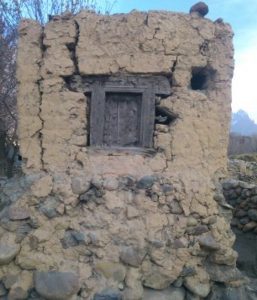
[x] I witness the hut of Mamusing before, which was demolished by Safar Baig. I heard he is demolishing the hut for the construction of a new house so as Convener of Wakhi Tajik Culture Association, I went to him and requested to handover the house to the villagers they will arrange wood for the construction of your new house but unfortunately, he did not believe me and demolished the house in the same day.
[xi] Muhammad Nayab narrated that Sher would have divine knowledge but he had even reading and writing ability that is why he made chrome while competing for winning Pamir. His education cannot be divine it is against the law of God, people need to practice reading and writing. His mother was daughter of a Qazi from Wakhan so she would be educated and may have taught his son reading writing and developing chrome.