
Inclusive Education
Teaching children with learning difficulties or disabilities by focusing on the importance of inclusive education in every educational institute is needed to focus in this era. Various terms are used for learning issues learning challenges, learning disabilities, learning difficulties, learning problems, learning deficiency, and even learning diseases. Apart from learning difficulties, there is a learning delay which also affects a child’s ability and confidence. Every individual may have one or more of the characteristics associated with learning difficulties or learning delays. These learning difficulties affect a person’s life by reducing his/ her performance and confidence. This needs to address for improvement. These problems are primarily the result of visual impairment, hearing, motor disabilities, mental retardation, and emotional disturbance. Or environmental fitness, cultural relevancy, or economic disadvantage and other effects.
Sheldon Horowitz narrates that “learning disability” is used to describe the seeming unexplained and unexpected difficulty a person has in acquiring basic academic skills. She defines that a “learning disability is not a single disorder. It is a term that refers to a group of disorders”.
Cheryl Weinstein says “A learning disability is a disorder in one or more of the basic cognitive abilities involved in understanding or using spoken or written language. This may lead to an imperfect ability to listen, think, speak, read, write, spell, or do mathematical calculations”.
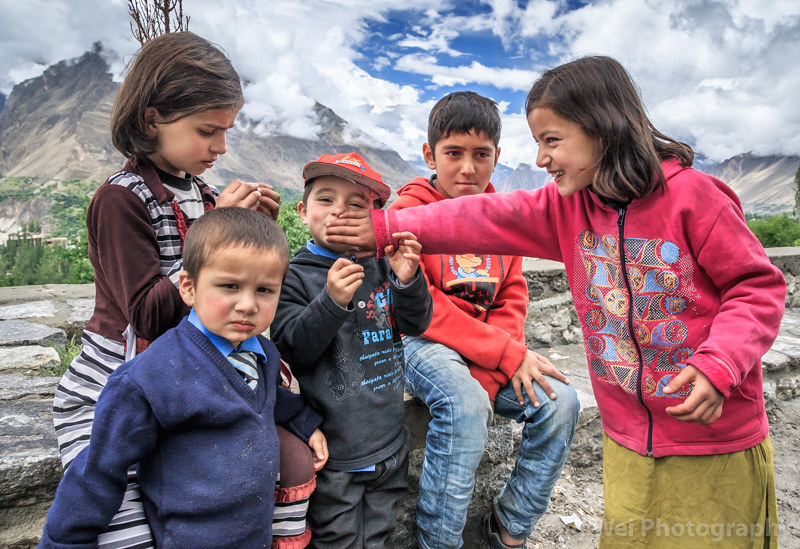
Several learning difficulties are affecting children, among them, Dyspraxia, Dyscalculia, Dysgraphia, Dyslexia, ADHD, Autism, and Visual, Auditory and Hearing problems are more common. In coordination to understand learning disabilities, education providers, parents, and facilitators. Teachers must develop a better understanding of learning processes and learn about reading, writing, math, and attention difficulties. Learn specific strategies and resources to deal with the challenge In our part of the world, learning difficulties are unknown to most instructors, teachers, parents, and most education providers. I worked with schools, school heads, teachers, and parents throughout Gilgit Baltistan, Chital, AJK, Mansehara, Sindh, D.I. Khan, Chakwal Islamabad, and Badakhshan in Afghanistan. Did not see any school working on inclusive education except MFF in Gilgit. School heads, teachers, and parents are direct stockholders to fight against learning disabilities alongside the child suffering from a situation unknown to him or her, most are even not aware of these challenges.
Some of the most common learning disabilities are:
- Dyslexia: this condition causes problems with language skills, particularly reading and writing. People with dyslexia may have difficulty in spelling, understanding sentences, and recognizing words they already know. Some of them may have issues in finding directions as well.
- Dysgraphia: Children with dysgraphia have problems with their handwriting. They may have problems forming letters, writing within a defined space, and writing down their thoughts.
- Dyscalculia: Children with this problem have difficulty understanding arithmetic concepts and doing such tasks as addition, multiplication, and measuring.
- Dyspraxia: Children with this problem have difficulty in motor coordination like poor balance, hand-eye coordination, ripping, etc.
- Apraxia of speech or verbal apraxia. This disorder involves problems with speaking. “Apraxia of speech is a disorder in which a child’s brain has difficulty coordinating the complex oral movements needed to create sounds into syllables, syllables into words, and words into phrases. Typically, muscle weakness is not to blame for this speech disorder” google.com
- Auditory processing disorder: Trouble with understanding and remembering language-related tasks. “Auditory processing disorder is a hearing problem that affects school-aged children. The students can’t understand what they hear in the same way other kids do. This is because the child’s ears and brain don’t fully coordinate”.
- Visual Motor Deficit: People with this condition mix up letters they might confuse in m and w, d and b, 6 and 9. The students may also lose their place while reading, copy inaccurately and write messily.
- Aphasia: Poor reading comprehension, difficulty in understanding spoken language, trouble with writing.
- Non-Verbal Learning Disorder: Problem with understanding facial expression, and body language.
- Learning Delay: several children are not suffering any of the above learning difficulties or disabilities but still suffering and remain behind the children of their age. “A developmental delay refers to a child who has not gained the developmental skills expected of him or her, compared to others of the same age. Delays may occur in the areas of motor function, speech and language, cognitive, play, and social skills”. (Google.com) These children can improve the specific area with days, weeks, and months as they need improvement and grow as normal children.
Awareness about learning difficulties and inclusive Education in Gilgit-Baltistan
Unfortunately, most of the teachers are untrained in teaching in different schools in our country especially in GB. Some of the education providers from the private sector are providing training on basic teaching and learning skill of inclusive education. Unfortunately training on the above difficulties remains untouched. To deal with children with learning delays need to train school heads, teachers, and parents to avoid blaming children for their poor performance or tagging them with the title of failure every year. As it is said training on Learning Disabilities has remained ignored throughout the region and by all education providers. Focusing on inclusive Education most ignored area a huge change or reform is possible. It will not only enhance learning ability but also minimize dropout in the schools.
Due to ignorance about learning difficulties, our assessment system is cruelest on the way to the education of children with learning challenges. Our assessment system ruins the confidence of children with learning disabilities while driving on the same path developed for normal children. It is time to think about children with learning difficulties or disabilities by focusing on inclusive education in every educational institute.
By: Aman Ullah Aman Maad
Totally agree that allot of effort is needed in this regard in the high mountains or Gilgit Baltistan as well…


Totally agree that allot of effort is needed in this regard in the high mountains or Gilgit Baltistan as well as in the city’s of Pakistan. It’s true that Gilgit Baltistan is doing great in the field of Education Government as well as private but some of the areas are still ignored. Inclusive Education, Steam and robotics, AI and Global Ethics are the need of this era.