Publications

English

Resilience to Persuasion of Education

In the late 60s, Female Education was even not visualized by the communities in Hunza Gojal but Imam of the time emphasizing on role of female education in the community development since 1940s. His guidance was creating positive thoughts in the mind youth of that time. Among them Gulam Rasul was one from Shimshal who became inquisitive about female education. He visited Karachi and observed girls in school and offices there he recalled the guidance of Imam of the time, which was reaching to the communities’ continuously.

Resilience to Persuasion of Education Read Post »
English

The Shimshal Flood

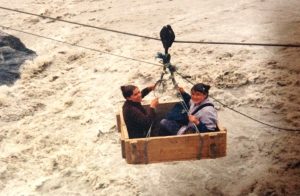
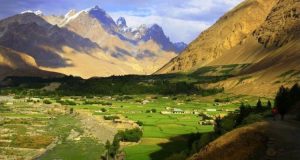
Shimshal is a village situated in the extreme north of Pakistan, on the eastern side of Hunza Gojal, sharing a very long border with China. Being a border village, Shimshal’s history is full of events of historical importance. The cyclical glacial outburst flood famously remembered in Hunza as the Shimshal Flood and called Verzhrav Flood by people of Shimshal, is one such historical event. This flood has a history of causing terrifying series of destruction throughout the length of Hunza, Nagar, and other downstream districts many times.

The Shimshal Flood Read Post »

English

Wẽkhon To Shimshal

The Oral History of Shimshal says that when Gikis/ Gigis was killed by his brother Maghlut of Nagar,  Mamusing traveled to Badakhshan with his elder brother Chusing to find out a king for Huza. As discussed Chusing and Mamusing succeeded in finding a prince for Hunza in Badakhshan darwaz and left Darwaz for Hunza. In their return from Darwaz to Hunza, Mamusing falls in love with a woman from the family of Qazian[ii] called Khadija in Wẽkhan and requested his brother to arrange their marriage. His bother refused and brought him back forcefully to Hunza.

Wẽkhon To Shimshal Read Post »

English

S̃heg̃hdsol “Nowroz”

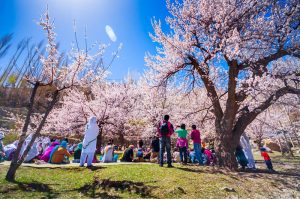
Nowruz (New Day) is the first day of Pamirian and Persian New Year, celebrated throughout the countries in most parts of Asia, which begins on the spring equinox marking the first day of the year, which several language groups celebrate. It is celebrated worldwide by various ethno-linguistic groups as New Year, and falls on or around March 21 of the Gregion calendar. It is the first day of Wakhi, Iranian and several ethno-linguistic calendar.

S̃heg̃hdsol “Nowroz” Read Post »

English

Tag̃hm “Wakhi Festival”

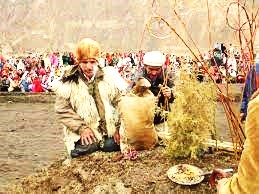
Several cultural and religious ceremonies are celebrated among the Wakhis surrounding the Pamir area in four countries Pakistan, China, Afghanistan, Tajikistan and Russia as well in the current times. In ancient times, the area was called Wuk̃han land of Wuk̃his. Tag̃hmi is one of the ancient events celebrated among the Wuk̃his (wakhis) on Bomidẽnyo Wuk̃han (Wakhas). It is said that Persian tukhm is derived from tag̃hm means seed.

Tag̃hm “Wakhi Festival” Read Post »

English

Farman Khona in Shimshal

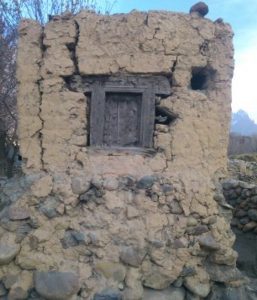
Religious Education was the first education system that traveled throughout the region in Wuk̃han, Parmer’s, and the surrounding area of Shimshal. In the case of Shimshal Islam was the religion that brought education to the village. The Ismaili preachers traveled from Yarkand to Badakhshan using the Shimshal valley so it remained a travel road of education. Among those travelers were Pir Sham, Khwaja Shahdad, Khuaja Hambẽrdi, Shahi Charagh, Shahi Sayed, and Shah Arif who converted Mir Hunza Salim Khan to Ismaili faith. These were some of the famous religious preachers and explorers who traveled through this region.  Though their oral materials have been passed to generations any written material is not found in the village.

Farman Khona in Shimshal Read Post »

Wakhi

Dhayẽs̃h Disht Yo Jonẽsh Dis̃ht ( Wakhi Story)

Shẽrũm Big gha dẽgẽretk mehnati shẽpũn tu. Har solẽs̃h dẽ Mẽrdũmẽ tug̃h molẽn zẽmiston tẽr hil/ iyloq shẽpũn haldẽ. Dẽ k̃hũ jẽwonig̃hẽ wakhti ya ziyoda tẽr G̃hũzhẽrv yizi niyeng magam maperig̃hri dẽ yũrtẽ molẽn dẽ pomir yizi niyeng. Yo k̃hẽnaki z̃ir ki, yo khus̃hkẽrda hil/ iyloq Pomir tu magam G̃hũzhẽravi bẽ dẽ k̃hũ molẽn yizi rek̃hk. Tobistonẽs̃h diyorẽ bũs̃hter khalgisht tẽr iyloqẽv dẽ k̃hũ molvẽn reg̃hdẽ woz sũrpoc̃hvẽs̃h pẽspodh pẽshetẽ magam Shẽrũm Bigẽs̃h dẽ k̃hũ hẽmrovẽn dẽ pẽtũn diyorẽ molẽn tẽr Pomir yizi haldẽ.

Dhayẽs̃h Disht Yo Jonẽsh Dis̃ht ( Wakhi Story) Read Post »

Scroll to Top